
Before your first Thai Massage: everything you need to know
What to wear, what to eat (or not eat), how to prepare, the opening ritual of the session, and what to expect. A practical guide for first-timers.
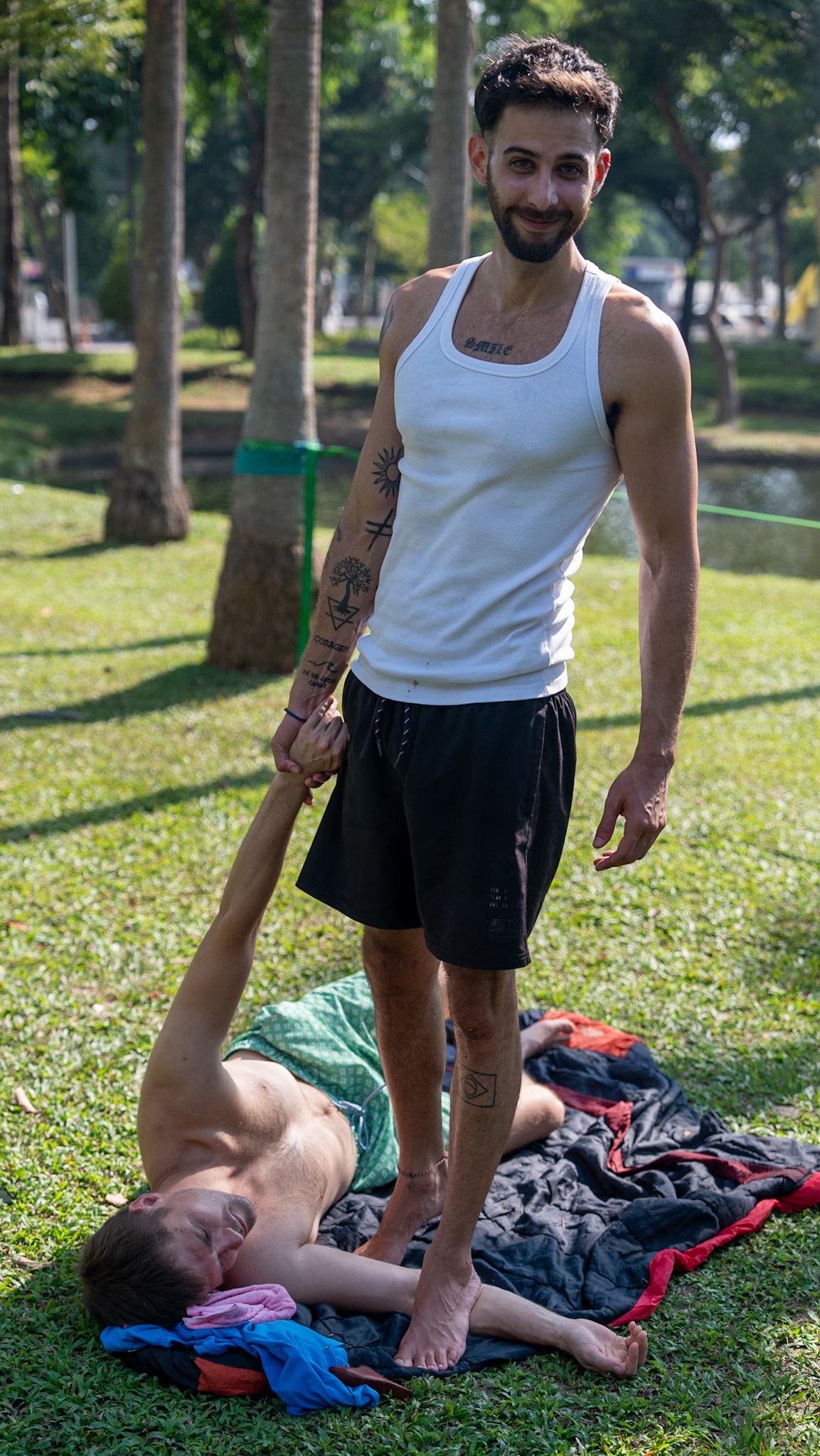
If you’ve never had Thai Massage, it’s normal not to know what to expect. Thai Massage isn’t a spa. It’s an ancient practice of healing and care for the other.
This piece covers the six most common questions I get before someone’s first session. Five minutes of reading and you arrive prepared.
1. What to wear
Comfortable t-shirt and pants, cotton or stretchy (leggings).
I recommend:
- Leggings, sweatpants, or athletic shorts
- Short-sleeve t-shirt or tank top
- Fabric that stretches and breathes (cotton, dri-fit)
Avoid:
- Jeans (don’t stretch)
- Button-up shirts (uncomfortable when lying face-down)
- Jewelry, watches, and makeup if possible (leave at home, or remove on arrival)
2. What to eat (and not eat) before
Main rule: empty stomach, or at least 2 hours after your last meal.
Thai Massage involves compressions on the abdomen, deep stretches, and changes of position. Eating heavily before will make you uncomfortable and the work less effective.
What works well:
- A piece of fruit an hour before
- A light snack (yogurt, nuts) two hours before
- Water. No restriction. Hydrate well before and after.
What to avoid:
- A full meal (lunch/dinner) in the two hours before
- Alcohol the same day (alcohol dehydrates and interferes with muscular relaxation)
- Coffee in the two hours before (caffeine makes it harder for the nervous system to drop into rest mode)
3. How the session begins (the ritual)
Before the massage itself, there’s an opening ritual that’s part of the work:
Relaxing tea. I offer you a tea when you arrive. We talk for a few minutes. I want to know a bit about your history, anything bothering you in your body, any expectations you have.
Guided breathing. You lie down, I guide you through deep breathing. This prepares the nervous system for the state of surrender.
Incense and meditation. I energize the space with incense, and open with a minute of meditation. It’s not decoration. It’s the part that connects technique to intention.
After that, the massage itself begins.
4. How to communicate with me during the session
The work happens mostly in silence. Background music carries the whole session, and the environment stays calm and receptive. This is intentional: it helps the nervous system slow down.
But you can (and should) speak up when:
- The pressure is too strong: “lighter please” or “take the pressure off”
- The pressure is too light: “you can press more”
- Something hurts (the bad kind, not the good kind): say so immediately
- You need a pause: “I need a minute”
- You’re cold or hot: I’ll adjust
Don’t try to “tough it out” if something is uncomfortable. Bodywork only functions when the body trusts what’s happening. If you’re silently enduring something unpleasant, the body closes up, and the work can’t reach where it needs to go.
5. What can happen during the session
Every body responds differently, but some patterns are common:
Wanting to sleep. Very common. You can sleep. I keep working.
Stomach growling. A sign that the parasympathetic nervous system has activated. Good sign.
Deep sighs, yawns. The body letting go. Welcome it.
Unexpected emotion. Some people cry. Others laugh. Others feel anger without knowing why. The body holds things, and sometimes they ask to pass through when the tension leaves. If it happens to you, that’s okay. You don’t have to explain or apologize. Just let yourself feel, without judgment.
Feeling “out of body”. Common in longer sessions. The nervous system entered a meditative state. It’s a magical sensation, enjoy it. By the end of the session everything will be back to normal.
Feeling one side of the body more than the other. Bodies have asymmetries. The session usually exposes and helps balance them.
None of these reactions are “wrong.” They’re all signs that the work is happening.
6. What to do after the session
The session doesn’t end when you stand up from the futon. The next 24 hours are part of the work.
Right after:
- Drink a lot of water (the work mobilizes tissue and releases substances that need to be eliminated)
- Walk slowly, no rush
- Avoid intense physical activity for the next two hours
The following 24 hours:
- Prefer light meals
- Avoid alcohol
- Sleep early if you can. The post-session sleep is often very deep
- Notice how the body feels different
The next day:
- There may be mild muscular soreness, like post-workout. That’s normal.
- Some people feel more energy. Others feel more tired. Both reactions are normal. Trust what the body asks for.
And if the first session doesn’t move me much?
It happens, and it’s normal.
The first session already delivers a lot. But it also depends on how much you let yourself surrender to the experience.
Many people say that from the second session on, you can notice an even deeper immersion.
So: don’t judge the practice by the first session alone. If something called to you, give it a second chance.
Ready? Book your first session or message me on WhatsApp. I reply personally. Sessions in Itacaré, Bahia, Brazil. English-speaking, international clients welcome.